Key Takeaways
- Terroir, soil, elevation, climate, and farming combined, is why Doghobble wine tastes like nowhere else.
- The Dahlonega Plateau’s 1,500–2,000 ft elevation and red clay soil give the wines their structure, body, and complexity.
- Healthy, living soil feeds the vine a richer profile than any fertilizer, and that complexity ends up in the glass.
- Every farming choice, from grazing sheep to native grapes, is really a soil-health decision.
- The soil has improved every year since 2020, and the wine improves with it.
There is a question we get asked in the tasting room more than almost any other.
What makes Doghobble wine taste the way it does?
The honest answer is not a single thing. It is a place. Specifically, it is 80 acres of red clay soil sitting atop a plateau in the North Georgia mountains, farmed by people who believe that the best thing they can do for the wine is take care of the land it comes from.
This post is about that land. What it is made of, why it matters, and how the specific conditions of the Dahlonega Plateau show up in every bottle we produce.
What Is Terroir?
Terroir is a French word with no clean English equivalent. It translates roughly as “a sense of place,” but that definition undersells it.
In wine, terroir refers to the complete natural environment in which a grape is grown: the soil composition, the elevation, the climate, the rainfall patterns, the aspect of the slope, the microorganisms in the earth, and the farming practices of the people who work it. All of these factors combine to create a flavor profile that is specific to one place and cannot be fully replicated anywhere else.
It is the reason a Norton grown on the Dahlonega Plateau tastes different from a Norton grown in Virginia or Missouri, even though it is the same grape variety. The place changes the wine. And the health of the place determines how clearly that character comes through.
The Dahlonega Plateau: What Makes This Land Different
The Dahlonega Plateau is a certified American Viticultural Area, one of the few in Georgia and the only one recognized specifically for its plateau geography. That recognition matters because the growing conditions here are genuinely distinct from the surrounding region.
Elevation. The Dahlonega Plateau sits at roughly 1,500 to 2,000 feet above sea level. That elevation brings cooler nighttime temperatures than the Georgia piedmont below, which slows the ripening process and allows grapes to develop more nuanced flavor compounds before harvest. In wine, the difference between grapes ripened slowly over a long season and those rushed to harvest by persistent heat is significant and detectable in the glass.
The red clay soil. The soil on the Dahlonega Plateau is dominated by red Georgia clay, a highly characteristic growing medium that drains well, retains heat, and provides a specific mineral profile that influences the flavor and structure of the wine. Wines grown in clay-heavy soils tend to show more body and earthiness than those grown in sandy or limestone-dominant soils. Our Norton and Chambourcin, in particular, reflect the weight and depth of this clay in their structure.
Rainfall and humidity. North Georgia receives significant annual rainfall, which presents challenges for certain grape varieties and advantages for others. As we have written about in our posts on native grapes and disease resistance, this is precisely why we grow varietals that evolved alongside Georgia’s humidity rather than fighting it. The rainfall that would threaten a Cabernet Sauvignon vineyard is simply the climate our native and heritage vines were built for.
The plateau microclimate. Sitting above the valley floor, the plateau benefits from air circulation that reduces the humidity buildup at ground level, moderating some of the disease pressure that affects lower-elevation vineyards in the region. The combination of elevation, airflow, and red clay soil creates a microclimate that is specific to this ridgeline and directly reflected in what grows here.
Why Soil Health Is the Most Important Variable
Of all the factors that make up terroir, soil health is the one most directly influenced by how a farm is managed. And it is the one that matters most for what ends up in the glass.
Healthy vineyard soil is not just dirt. It is a living ecosystem containing billions of microorganisms per teaspoon: bacteria, fungi, protozoa, nematodes, and dozens of other species that interact with each other and with the vine’s root system in ways science is still working to fully understand. This microbial community breaks down organic matter into nutrients the vine can use, protects the roots from pathogens, and facilitates the exchange of minerals between the soil and the plant.
When this community is intact and thriving, the vine has access to a far broader and more complex nutritional profile than any synthetic fertilizer can provide. That complexity travels up through the roots, into the fruit, and ultimately into the wine. It is one of the primary reasons wines from healthy, living soils taste more interesting than wines from depleted, heavily managed ground.
This is not a philosophical claim. It is measurable. Vineyards that have transitioned from conventional to regenerative management consistently show improvements in soil microbial diversity, vine health metrics, and wine quality assessments over time. The relationship between what is happening underground and what is in the bottle is direct and well-documented.
How Doghobble Builds Soil Health
Every farming decision at Doghobble is, at its core, a soil health decision.
The sheep that graze between our vine rows are returning organic matter to the soil with every pass. Their manure feeds the microbial life that drives nutrient cycling. Their hooves aerate the compacted surface layer without the deep disturbance that tilling would cause. The ground cover they graze, as it regrows and cycles through the season, adds further organic matter to the top layer of soil.
The native grape varieties we grow require fewer synthetic inputs than European varieties in this climate. Fewer inputs means less disruption to the soil biology. Our four-spray-per-year program versus the thirty or more that conventional California-style viticulture might require is not just a cost and environmental decision. It is a decision to leave the soil ecosystem more intact.
The animals across the broader farm, the chickens, the guinea hens, the donkeys, all contribute to the biological complexity of the land. A farm with diverse animal life has more complex soil biology than a monoculture operation. More complexity in the soil means more complexity in the wine.
Every one of these decisions compounds over time. The soil at Doghobble is better today than it was when we started farming this land in 2020. It will be better still in five years, and better again in ten. That trajectory is the whole point of farming this way.
What You Taste When You Taste Doghobble Wine
When you visit the wine farm and sit down in the Trellis tasting room or out on the Pavilion on the Plateau and lift a glass of our Norton, you are tasting the Dahlonega Plateau. The red clay is in the structure. The elevation is in the acidity. The native varietal is in the dark fruit and the spice. The regenerative farming is in the complexity that lingers after the last sip.
None of that was designed in a laboratory or manufactured from a recipe. It grew from this specific place, managed by people who chose to let the land speak rather than override it.
That is what terroir means at Doghobble. And it is why no other winery in this region, or anywhere else, makes wine that tastes quite like ours.
Come Taste It
Doghobble Wine Farm is located at 10 Roy Grindle Road, Dahlonega, GA 30533, on the Dahlonega Wine Highway, about 90 minutes north of Atlanta and 10 minutes from historic downtown Dahlonega. We are open Sunday through Thursday from 12 to 6pm and Friday through Saturday from 12 to 7pm. Walk-ins are always welcome. For groups of 6 or more, call ahead at (470) 310-0491 or email hello@doghobblevineyard.com.
Terroir refers to the complete natural environment in which a grape is grown, including soil composition, elevation, climate, rainfall, and farming practices. It matters because these factors combine to create a flavor profile that is specific to one place and cannot be fully replicated elsewhere. Wines with a strong sense of terroir taste distinctly of where they come from rather than conforming to a generic varietal style.
Doghobble sits on the red clay soil characteristic of the Dahlonega Plateau in North Georgia. This clay-dominant soil drains well, retains heat, and provides a specific mineral profile that contributes body, earthiness, and structural depth to the wines grown in it. The red clay of North Georgia is one of the most recognizable terroir signatures in the region.
The Dahlonega Plateau sits at roughly 1,500 to 2,000 feet above sea level. This elevation brings cooler nighttime temperatures than the surrounding Georgia piedmont, slowing grape ripening and allowing for more complex flavor development before harvest. Elevation is one of the primary factors that distinguishes Dahlonega Plateau wines from those produced at lower elevations in the state.
Healthy vineyard soil contains a complex community of microorganisms that interact with vine roots to facilitate nutrient uptake, protect against pathogens, and provide a broader and more complex nutritional profile than synthetic fertilizers can replicate. This biological complexity travels from the soil through the vine and into the fruit, producing wines with greater depth, complexity, and a more genuine expression of the place they come from.
The Dahlonega Plateau is a federally recognized American Viticultural Area in North Georgia, designated for its distinctive plateau geography, elevation, soil composition, and growing conditions. It is the primary wine-growing region in Georgia and is particularly well-suited to native American grape varietals and French-American hybrids that perform well in the region’s climate.
Every farming decision at Doghobble, from the native grape varieties we grow to the sheep that graze our vineyard rows to our minimal spray program, is designed to support healthy soil and a more complete expression of the Dahlonega Plateau’s natural character. The result is wine that reflects a specific place and a specific set of values rather than a formula. That specificity is what makes it taste the way it does.
The same grape variety produces different wines in different places because terroir, the combination of soil, climate, elevation, and farming, shapes the fruit differently in each location. A Norton grown on the Dahlonega Plateau at 1,500 feet in red clay soil will express different characteristics than a Norton grown in Virginia or Missouri, even using the same winemaking techniques. This regional expression is one of the most compelling aspects of wine as a category.
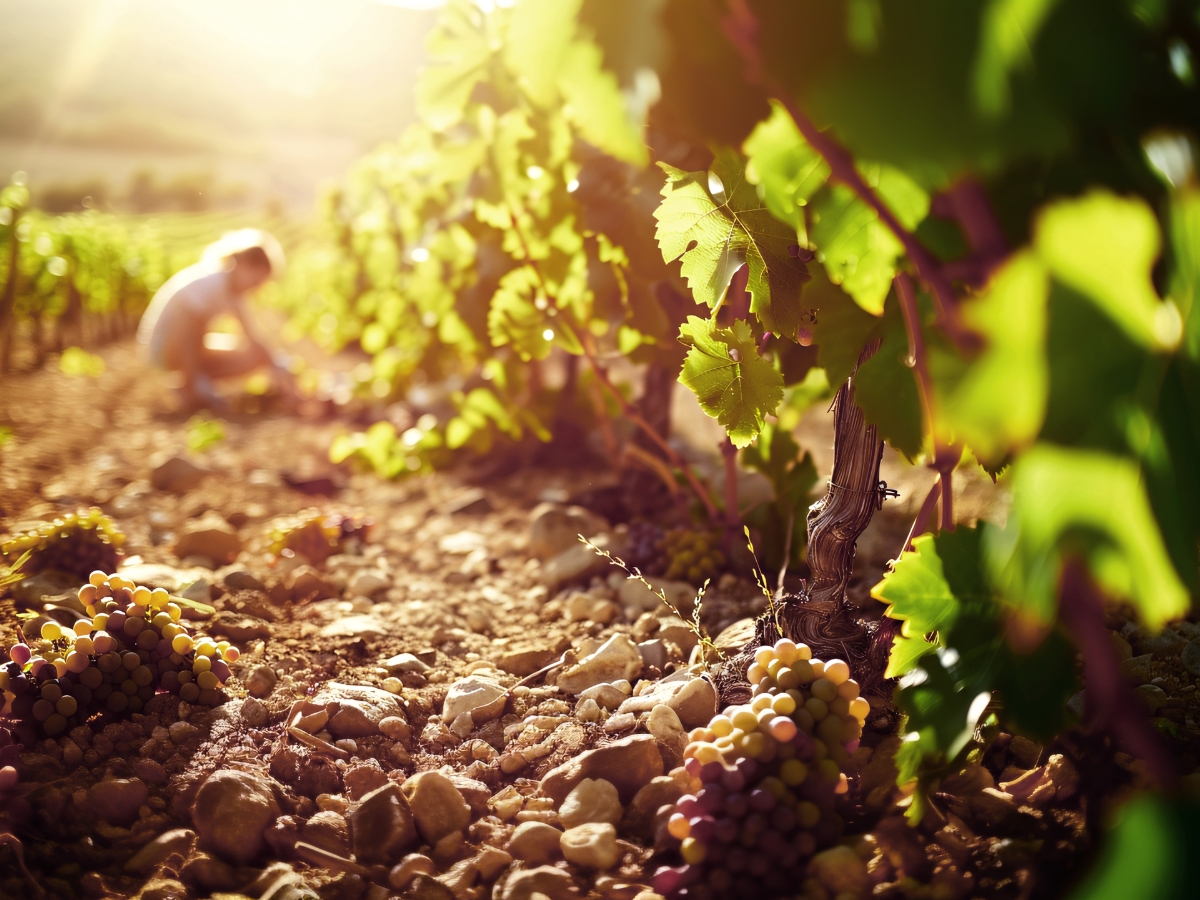
Table of contents
You may also like
 Published On: April 2, 2026
If you're planning a wine tasting trip through North Georgia or Dahlonega, there's one question that comes up almost as [...]
 Published On: April 1, 2026
In 2018, the federal government officially recognized a new American Viticulture Area in Georgia, the Dahlonega Plateau AVA, covering the [...]
 Published On: April 1, 2026
From Locals Who Live Here Just over an hour north of Atlanta on GA-400, less time than it takes to [...]
 Published On: March 19, 2026
A conversation about cooking with heart, feeding sheep arugula, and why the chef's board is her favorite thing on the [...]
 Published On: February 26, 2026
There is something quietly magical about a vineyard in winter. Most people think of wine country as a summer and [...]
 Published On: February 16, 2026
If you've visited wineries in California or Napa, you might wonder: Where's the Cabernet Sauvignon? Why so much Norton and [...]
 Published On: February 12, 2026
Nestled in the foothills of the Blue Ridge Mountains, Dahlonega has earned its reputation as the heart of Georgia’s wine [...]