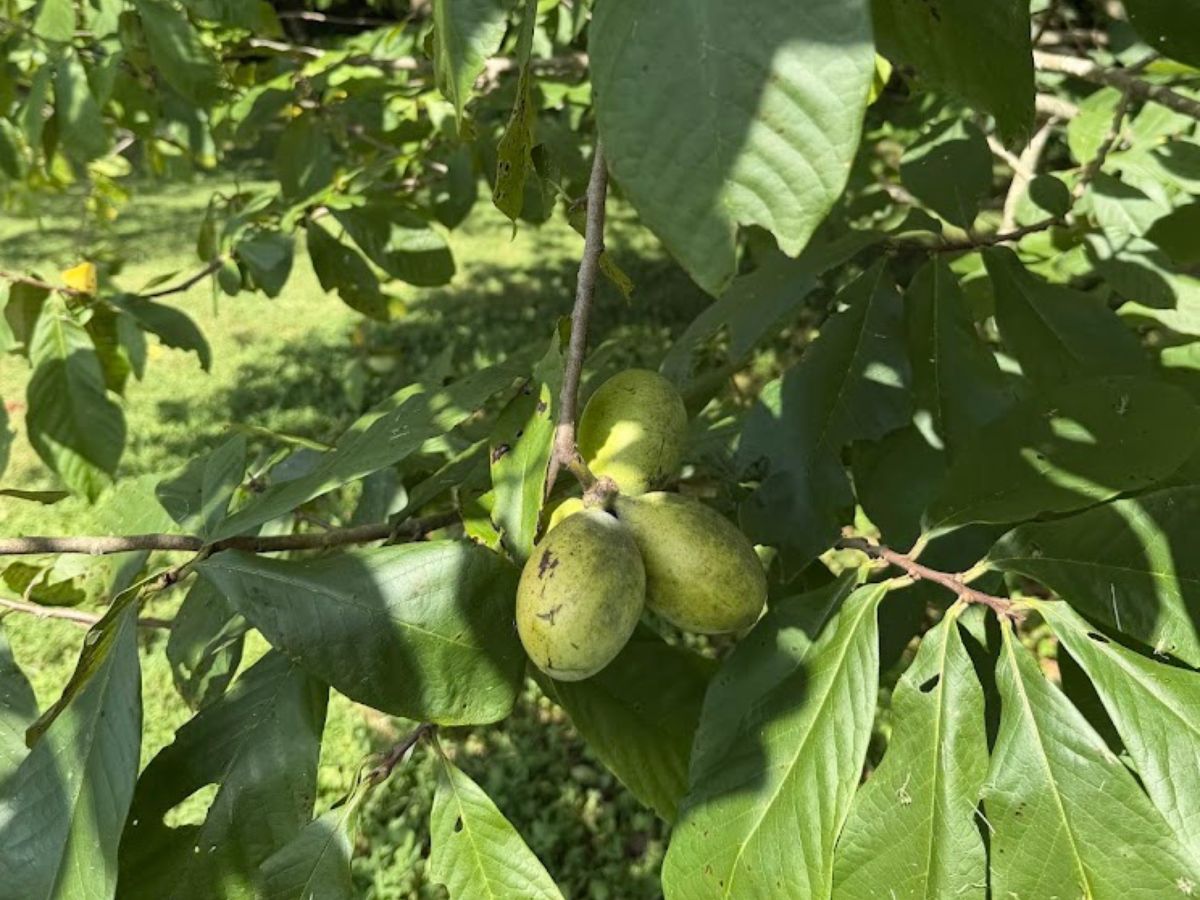
The short answer: pawpaws grow wild all over Georgia, but finding a ripe one is another matter. They favor shaded creek bottoms and forest understory, they ripen for only a few short weeks between late August and September, and once the fruit is ready, you’re racing the raccoons, the possums, and every forager who found the patch before you did.
The more reliable answer: go where they’re being grown on purpose. A small but serious community of Georgia farmers is cultivating pawpaws today, and at Doghobble Wine Farm in Dahlonega, we planted a pawpaw orchard right here on the farm. During pawpaw season you can walk it, taste the fruit at peak ripeness, and meet the people growing it across the state.
Here’s what you’re looking for, why it’s worth the hunt, and where to actually find one.
What Is a Pawpaw, Anyway?
The pawpaw (Asimina triloba) is the largest edible fruit native to North America, and it is native to Georgia, along with roughly two dozen other states across the East and South. What makes it remarkable is its family tree: nearly all of its botanical relatives are tropical fruits like cherimoya and sweetsop. The pawpaw is the one member of the family that wandered north and stayed.
The flavor shows that heritage. The flesh is creamy, almost custard-like, with a taste people usually describe as somewhere between banana, mango, and melon. It’s a tropical experience from a tree growing in the Georgia woods.
And it has a résumé. Native Americans prized the fruit long before European settlers arrived. George Washington was said to enjoy chilled pawpaw for dessert, Thomas Jefferson grew the trees at Monticello, and the Lewis and Clark expedition leaned on pawpaws for food in the final stretch of their journey home. Daniel Boone and Mark Twain were fans, too. This was once one of America’s best-loved fruits.
Why You’ve Never Seen One in a Grocery Store
The pawpaw never made the leap to commercial agriculture the way other American natives like blueberries and pecans did, and the reason is simple: the fruit doesn’t travel. A ripe pawpaw lasts only three or four days at room temperature. It bruises easily, it doesn’t ship, and it refuses to be rushed.
That fragility is exactly why the pawpaw stayed a secret, a fruit passed down in the places where it grows, known to foragers, old-timers, and now a new generation of Georgia growers. If you want to taste one, you have to go to it. It will not come to you.
Finding Wild Pawpaws in Georgia
If you want to forage, look in the right habitat: shaded understory near creeks and river bottoms, where the trees often grow in patches or groves. The leaves are large, up to a foot long, and droop in a way that gives the tree an almost tropical look in the forest.
The tricky part is timing and ripeness. Pawpaws generally stay green even when ripe, so color won’t help you. A ripe fruit gives slightly to a gentle squeeze, like a peach, and a truly ready one is intensely fragrant. Fruit that has fallen naturally from the tree is usually closest to eating. One important note: eat only the flesh. The seeds and skin should never be consumed.
Foraging is rewarding, but it’s a gamble. The season is short, wildlife gets there first, and good patches are guarded secrets. Which brings us to the better option.
The Easier Way: Visit the Pawpaw Orchard at Doghobble Wine Farm
We planted a pawpaw orchard at Doghobble for the same reason we grow native grapes like Norton and Muscadine: we believe the best things on this farm come from plants that actually belong here. The pawpaw belongs on the Dahlonega Plateau. It fed the people of these mountains for centuries before it faded from memory, and we think it deserves a place at the table again, right alongside the wine.
Visitors to the farm can see the orchard as part of a visit to the farm, and pawpaw season, from late August through September, is the best time to catch the fruit at its peak.
Georgia PawPaw Day at Doghobble
On Sunday, September 6, from 2 to 5 PM, Doghobble Wine Farm hosts an afternoon dedicated entirely to Georgia’s forgotten native fruit:
2:00 PM, PawPaw Tasting. Taste ripe Georgia pawpaws at the peak of the season. 3:00 PM, Panel Conversation. Three of Georgia’s leading pawpaw growers talk growing, foraging, and the future of native fruit in the South: Sam Zamarripa (Founder & Owner, Doghobble Wine Farm), Blake Price (Founder & Owner, Athens Orchards), and Blair Housey (Founder & Owner, Etowah Meadery). 4:00 to 5:00 PM, More Tasting & Orchard Tour. Walk the pawpaw orchard and ask the growers anything.
Wine and pawpaw mead will be available for purchase throughout the afternoon, along with wood-fired pizza and food from the Farm Table. Tickets are $10 for the pawpaw tasting, and the event is limited to 50 guests, so reservations are strongly recommended.
Reading this after September 6? Pawpaw season runs from late August through September. The best way to catch it is to visit the farm during those weeks, or check our events page for what’s happening this season.
Visit Doghobble Wine Farm
Doghobble Wine Farm is located at 10 Roy Grindle Road, Dahlonega, GA 30533, on the Dahlonega Wine Highway, about 90 minutes north of Atlanta and 10 minutes from historic downtown Dahlonega. We’re open Sunday through Thursday from 12 to 6pm and Friday and Saturday from 12 to 7pm. For groups of 6 or more, call ahead at (470) 310-0491 or email hello@doghobblevineyard.com.